How to Choose a Spray Foam Company in Thayer
Pick a spray foam installer who answers nine questions well: licensing, insurance, product choice, thickness checks, references, and cleanup. Here is the exact checklist to run before you sign anything.
Part of our Spray Foam Insulation service.
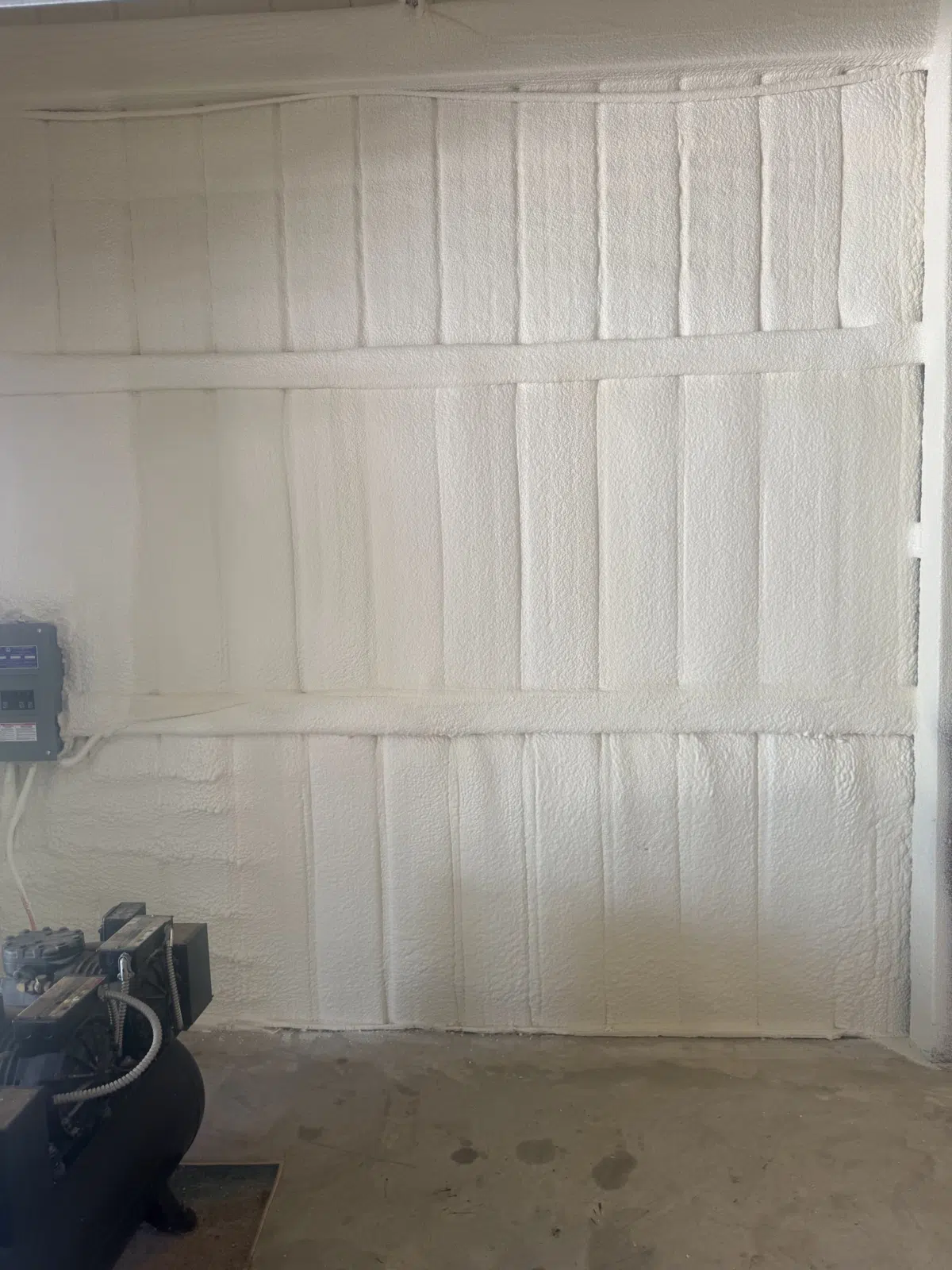
1. Ask Which Foam They Use and Why
A real installer will name the product on the spot: closed cell, open cell, and the brand they spray. If the answer is vague, or you hear 'we use whatever works,' keep looking. Closed cell foam is what most Ozarks homes need on walls, roofs, and crawl space walls because it sheds moisture. Open cell makes sense in attics and interior sound work. The right company explains the difference in plain English and tells you which one fits your Thayer home before you ask. If they only carry one product and claim it fits every job, that is a red flag too. We stock both open cell and closed cell at Missouri Foam Solutions because a cabin near Eleven Point River and a pole barn in Alton need different things.
2. Confirm They Measure Thickness During the Spray
Spray foam only performs if it hits the specified depth. Closed cell typically needs to pass a minimum lift thickness per pass, and open cell attic fills need a full, even layer with no thin spots. Ask the contractor how they verify thickness: a proper crew checks passes with depth gauges while the foam is still soft, not after it cures when nothing can be fixed. Under-sprayed foam is the most common shortcut in this trade because foam is the expensive part of the job. A company that skips thickness checks is quietly selling you less insulation than you paid for. Ask to see the gauges or the log sheet. Any installer who does this daily will show you without hesitation.
3. Ask About Their Rate of Rise and Rejected Batches
Spray foam is a two-part chemical that has to mix at the right ratio and temperature. When a batch comes off, a trained installer stops and adjusts. Ask the question directly: 'What happens when a batch does not rise right?' A good crew scrapes it off and re-sprays. A bad crew keeps spraying and hopes you will not notice the soft, spongy, or cracked spots. Bad foam loses R-value, can pull away from studs, and may never cure fully. This single question separates professionals from truck-and-a-ladder operators better than anything else you can ask. Listen for specifics: ratio checks each morning, drum temperatures, test patches on every job.
4. Verify Licensing and Insurance Before the Truck Rolls
Spray foam work involves chemicals, respirators, ignition sources, and your home's envelope. Ask for proof of general liability insurance and confirm the crew applying foam, not just the salesperson, is covered. Ask about any certifications the installer holds for handling the product. Then check that they pull permits when the job calls for one. An uninsured crew that gets hurt on your property, or that sprays a chemical product without training, puts you at risk. In a rural county near Thayer it is tempting to hire the cheapest guy with a rig, but a bad foam job inside your walls cannot be cheaply undone. Getting this paperwork up front costs you five minutes and protects you for decades.
5. Ask How They Protect the Rest of Your Home
Foam overspray sticks to everything it touches and it does not come off. A careful installer masks windows, doors, floors, and any adjacent surface before spraying, seals off the work zone with plastic, and ventilates properly during and after the application. Ask what their prep looks like and what their cleanup includes. If the answer is 'we are pretty careful,' ask them to walk you through it step by step. Homeowners in West Plains and Willow Springs tell us horror stories about patio doors, water heaters, and gravel driveways coated in overspray. The prep and the masking take hours, and skipping them is a sign the crew cuts corners on other parts of the job too.
6. Ask When You Can Re-Enter the House
Cured spray foam is inert, but the material off-gasses while it is rising and curing. The standard answer is that occupants stay out during application and for roughly 24 hours after, depending on the product and ventilation. Ask every contractor you interview for their specific re-entry time in writing. If someone tells you it is fine to stay in the house while they spray, or that there is no wait at all, walk away. If someone tells you a week, ask why. Getting a straight, specific answer here shows the crew actually knows the chemistry of the product they are putting in your home and takes your family's health seriously.
7. Ask for References From Jobs Like Yours
Every insulation company will tell you they do great work. Ask them to name three recent customers with projects similar to yours: a stick-frame house if you own one, a cabin if that is your situation, a metal shop if that is the job. Then call them. Ask whether the crew showed up on time, whether the thickness was right, whether cleanup was handled, and whether they would hire them again. A contractor with real experience in the southern Missouri Ozarks will have a list ready. If they stall, or only offer jobs from years ago, that tells you what you need to know. Local references also tell you whether the company actually works your area or just drives through it.
8. Get the Scope in Writing, Not a Price Scribbled on a Board
A proper quote states the exact areas to be foamed, the product, the target thickness, the R-value you should end up with, what prep and cleanup are included, and the timeline. Anything less leaves room for a thinner application or a cheaper product swap after you sign. Some crews quote low to win the job, then spray less than the written spec because nobody wrote one down. Compare bids line by line, not just the bottom number. The lowest bid with no written thickness spec is usually the most expensive job in the long run, because re-doing bad foam means removal, disposal, and a second full application.
9. Ask Who Actually Runs the Rig
This one catches homeowners off guard. Some companies sell the job locally, then send a rotating subcontract crew you have never met. Ask directly: will the person giving you the quote be on site, and who will be spraying? Consistency matters in foam work because the person who inspected your rim joists and measured your attic is the one making judgment calls mid-spray. At Missouri Foam Solutions, the crew you meet at your Thayer property is the crew that does the work. We spray foam in cabins, farmhouses, and shops across the Ozarks every week, and we put our own name on every job. If a contractor cannot answer this question clearly, assume the answer is a subcontractor and price in that risk.
Ready to move forward? See our Spray Foam Insulation service
Related guides
Written by the Missouri Foam Solutions team.