Signs You Need Spray Foam Insulation and When to Call a Pro in Thayer
Most homes that need spray foam insulation are losing heated and cooled air through gaps in the shell: rim joists, wall cavities, and attic bypasses that fiberglass batts never fully sealed.
Published
Part of our Spray Foam Insulation service.
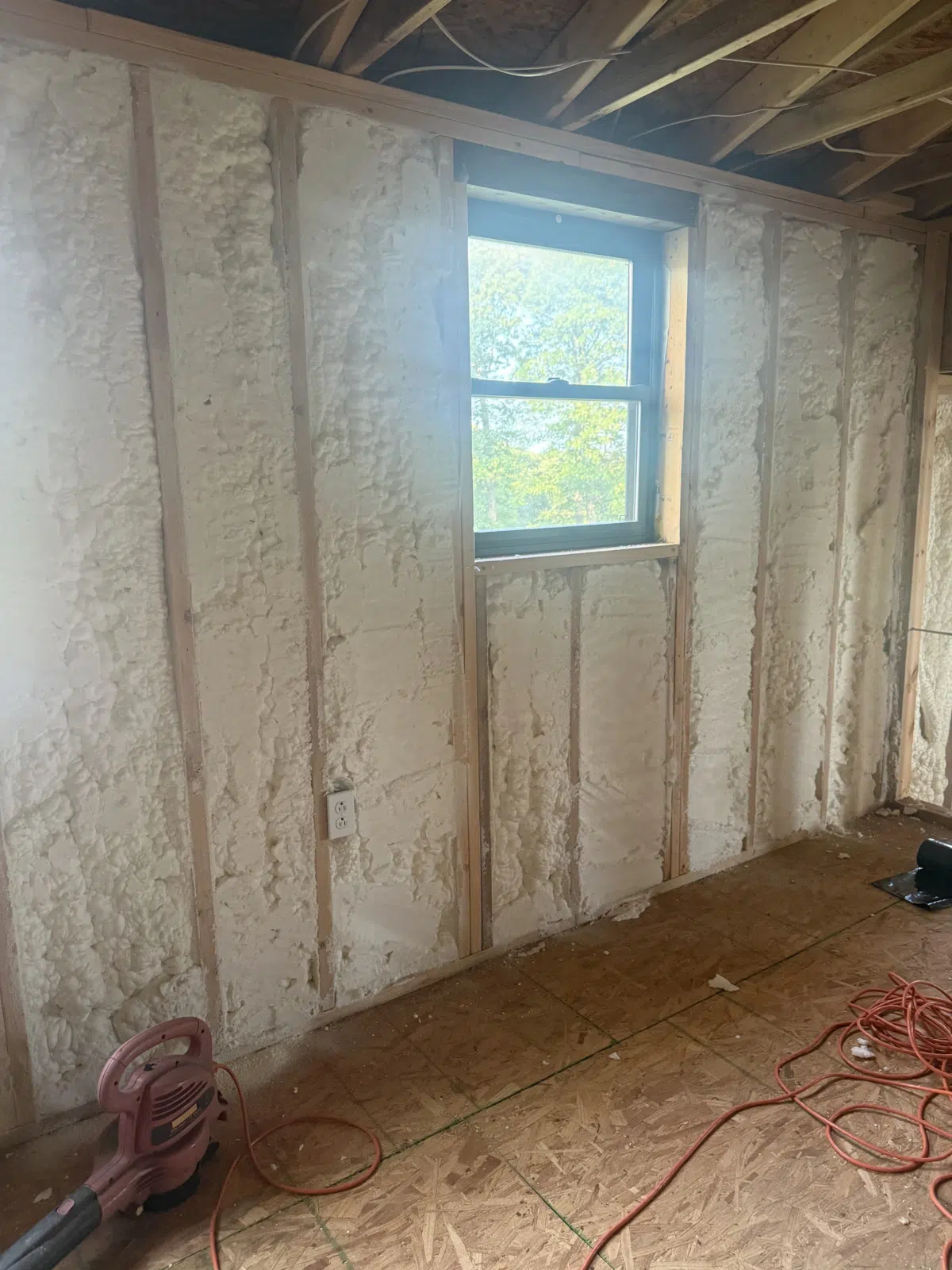
What a Home That Needs Spray Foam Looks and Feels Like
A home that needs spray foam rarely announces the problem with anything dramatic. It shows up as small daily annoyances: a furnace that runs constantly on cold January nights, a back bedroom that stays hot in July, dust that reappears the day after you clean. Around Thayer and the rest of the Ozarks, where summers are humid and winters swing hard, those annoyances stack up fast. Missouri Foam Solutions in Thayer wrote this guide on signs you need spray foam insulation and when to call a pro.
The usual cause is air leakage. Fiberglass batts and blown-in fill slow heat movement, but they do nothing to stop air from squeezing through gaps where framing meets, where wiring and pipes pass through wall plates, and along the rim joist where the house sits on the foundation. Every one of those leaks trades the air you paid to heat or cool for outside air.
Spray foam insulation works differently. It expands to fill those gaps and bonds to the framing at the same time, so it insulates and air seals in a single pass. Missouri Foam Solutions has sprayed foam in river cabins, farmhouses, and pole barns across the area, and the pattern is almost always the same: a shell that was insulated but never sealed. The signs below help you figure out whether that describes your home.
Drafts Around Outlets, Baseboards, and the Rim Joist
Drafts are the most direct evidence of a leaking shell, and they show up in predictable places. On a windy day, put the back of your hand near electrical outlets on exterior walls, along baseboards, and where the wall meets the floor. If you feel cool air moving in winter or warm air in summer, that is outside air finding a path straight through the wall.
The rim joist deserves special attention. Head to the basement or crawl space and look at the band of wood where the floor framing rests on the concrete. In most older homes in Thayer, West Plains, and the surrounding towns, that band was either left bare or stuffed with a section of batt that has since sagged or gone gray. It is one of the leakiest spots in the whole building.
Small drafts around a single outlet can sometimes be handled with a tube of caulk. Drafts showing up in several places mean the leak points are too many and too scattered for spot fixes, and that is exactly the situation where foam earns its keep.
Six Checks You Can Run This Weekend
You do not need special equipment to gather real evidence. Before you call anyone, work through this list and write down what you find.
- On a cold or windy day, run the back of your hand slowly along exterior walls, outlets, and window trim. Note every spot where you feel air movement.
- Hold a single-ply tissue in front of a closed exterior door and window frames. A tissue that flutters steadily points to a genuine leak rather than a one-time gust.
- Look at the rim joist in the basement or crawl space. Bare wood, sagging batts, or old foam with visible gaps all count as findings.
- Hang an inexpensive thermometer in your coldest room and one in a central room. A large gap between the two readings tells you the shell is uneven.
- Walk the outside of the house where two walls meet and where the foundation meets the siding. Gaps, daylight, or missing trim are entry points for air and pests.
- Peek into the attic hatch with a flashlight and note whether insulation looks even across the ceiling or thin and scattered near the edges.
Three or more positives from this list make a strong case that the home needs sealing, not just a thermostat adjustment.
Rooms That Never Match the Thermostat
If the thermostat says one thing but the room you are sitting in says another, the problem is usually not the thermostat. When a shell leaks air in some places and not others, rooms at the ends of duct runs and rooms over unconditioned spaces drift away from the rest of the house. The bonus room over the garage, the bedroom above the crawl space, and any room on a north-facing wall are the usual suspects.
Homeowners often try to solve this by closing vents in other rooms or cranking the system harder. That treats the symptom and usually shortens the life of the equipment doing the work. The real fix is making the wall, floor, or ceiling between that room and the outdoors airtight and well insulated.
This is where foam outperforms batts in existing walls and awkward spaces. Because it expands into cavities, it reaches the corners and seams a batt was never cut to fit. If one or two rooms have never been comfortable, that is a sign worth taking seriously.
Utility Bills That Climb Every Summer and Winter
Every Ozarks homeowner knows the pattern: a humid July or a single-digit cold snap sends the power bill up. The sign to watch is not one bad month, it is a trend. If your bills keep climbing year over year while your habits and your equipment stay the same, the building itself is likely leaking more than it used to, or it never performed well to begin with.
Compare notes with a neighbor who lives in a similar house. If their system runs half as much as yours in the same weather, that is a real clue. An aging heat pump or AC can also be the cause, so rule that out too, but leaky shells make equipment work so hard that the two problems feed each other.
Sealing the shell with foam reduces the run time the equipment needs to hold a temperature. The savings vary by house, so be wary of anyone who promises a specific percentage before they have seen your building. What we can tell you is that run time drops when the conditioned air stops escaping.
Humidity, Musty Smells, and Sweaty Windows
Moisture problems are insulation problems wearing a disguise. In the Ozarks, summer air is heavy with humidity, and every air leak pulls that damp air into wall cavities, the attic, and living spaces. The result shows up as condensation on the inside of windows in winter, a house that feels clammy even when the AC runs, and a musty smell drifting up from the crawl space.
That smell is worth chasing. Air in a house moves upward, so air pulled in through the crawl space and rim joist passes through the rooms above on its way out the attic. If the crawl space is damp, the whole house breathes damp air. Foam sealing the rim joist and band area stops that pathway, and for crawl spaces that stay wet, crawl space encapsulation is the companion fix.
Watch for other clues: paint peeling near the floor line, rust spots on HVAC registers, and wood trim that swells and sticks in summer. Those are signs the house is moving humid air through places it should not be.
Insulation You Can See Falling, Settling, or Missing
Some homes give you the answer without a single test, because the insulation is visible. Look up in an unfinished garage, a basement ceiling, a crawlspace, or a pole barn. Batt insulation should sit snug against the substrate. If you see sections hanging loose, gaps between batts, paper faces torn away, or material that has gone dark and dusty, it has stopped doing its job.
Rodent damage is common in country homes around Thayer, Ava, and the surrounding towns. Mice tunnel through batts and leave bare spots and droppings behind, and a torn-up batt cannot be patched by pushing it back into place.
One caution: if the existing insulation is wet, moldy, or heavily contaminated, spraying foam over it is not the answer. The damaged material should come out first so the foam bonds to clean framing. Our old insulation removal service handles that step, and then foam goes down on a surface that will hold it for the life of the building. Visible damage plus a drafty shell is a strong sign the home is ready for a full upgrade.
When to call a pro
Some findings on the checklist above point straight past do-it-yourself territory. Call a professional crew if you found any of the following: daylight visible at the rim joist or where walls meet the foundation, insulation that is damp, moldy, or carrying rodent contamination, drafts appearing in three or more places, rooms that have never held a temperature, or attic insulation that is thin and scattered across the majority of the ceiling.
Spray foam itself is also pro-only work. It involves chemical components mixed at high pressure, and the job only performs if the ratio, temperature, and thickness are right. A bad foam job is far harder to undo than a bad caulk job, and the crew's experience matters as much as the material.
If your list came back with several positives, Missouri Foam Solutions can walk you through what your home is showing. Start with our Spray Foam Insulation page for the full picture of how the work goes, or call 417-280-3415 and describe what you found. We will tell you honestly whether foam, spot air sealing, or a different fix fits your building.
Ready to move forward? See our Spray Foam Insulation service
Related guides
Written by the Missouri Foam Solutions team.
Signs You Need Spray Foam Insulation and When to Call a Pro in Thayer FAQs
How can I tell if my walls are under-insulated without opening them?
Exterior walls that feel noticeably cold in winter or warm in summer compared with interior walls are the first clue. Combine that with uncomfortable rooms along those walls and a system that runs constantly. A conversation about the home's age and construction, or an infrared scan, can confirm what the wall cavity holds without cutting anything open.
Is spray foam worth it in an older Ozarks farmhouse?
Older farmhouses and cabins around Thayer often have settled batts, rodent damage, and decades of small gaps that opened up as the framing moved. Foam addresses all of that at once by filling and sealing irregular cavities. Every older building is different, so the honest answer comes from looking at the rim joist, attic, and wall construction first.
What is the difference between air sealing and spray foam insulation?
Air sealing targets individual leaks with caulk, weatherstripping, and one-part foam, which works well for a handful of small gaps. Spray foam insulates and seals large areas at the same time, filling cavities and bonding to framing. On most leaky homes the two approaches complement each other, with foam handling the big surfaces and sealing the fine details.
Does spray foam insulation help with noise?
Open cell foam absorbs sound energy in the wall cavity, so it noticeably quiets traffic, wind, and noise between rooms compared with an empty or batt-filled cavity. It is not soundproofing, and it will not stop structure-borne noise carried through framing. But for a shop, a road-facing bedroom, or a shared wall, the difference is real and easy to appreciate.
Still have a question? Call and ask. We answer the phone. Call (417) 280-0596